

The American dream of homeownership often feels like it’s being held hostage by the monthly rent check. For many aspiring buyers, the “rent trap” is a frustrating cycle: you need a home to stop paying rent, but your rent is so high that you can’t save for a home. With housing costs in major urban hubs consuming 30% to 50% of the average paycheck, the prospect of scrounging together a five-figure sum for a deposit seems daunting.
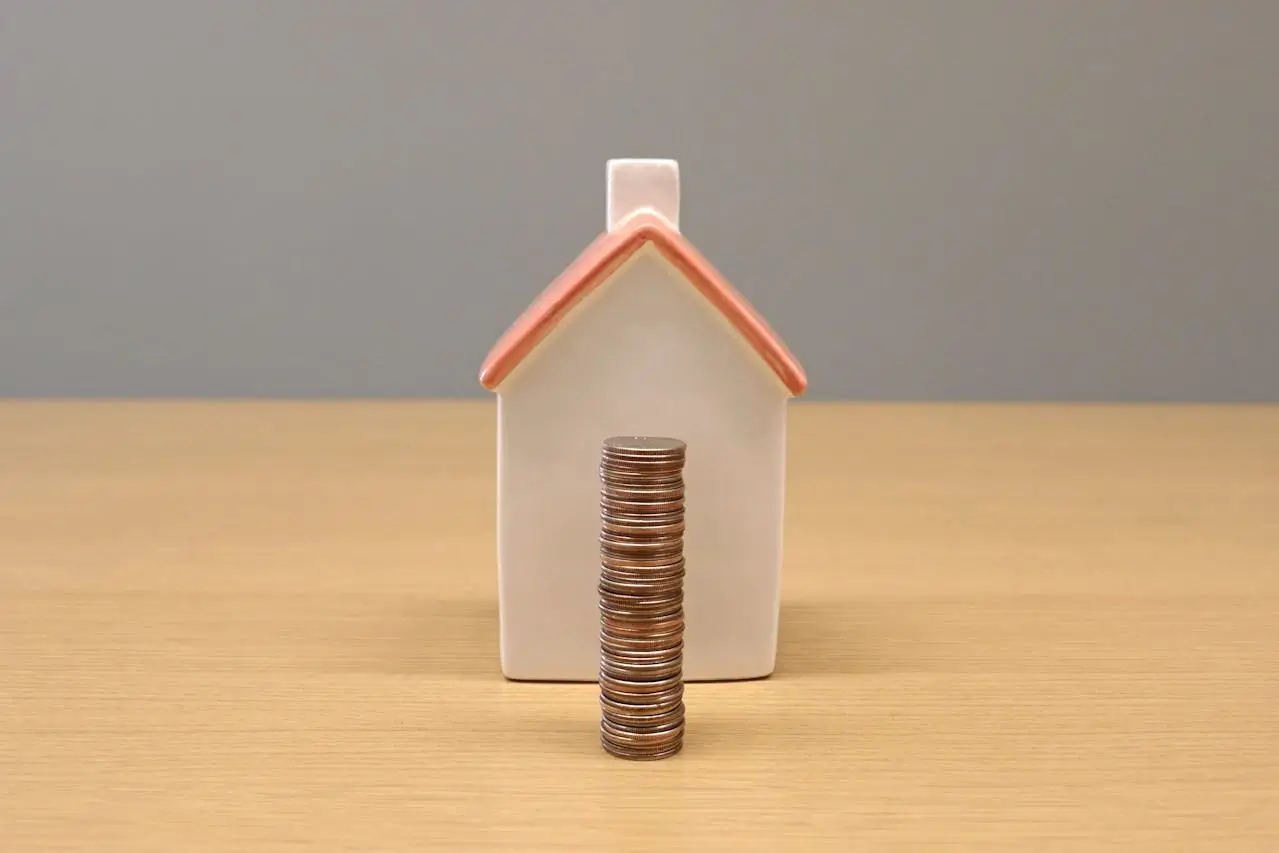
However, the path from tenant to homeowner isn’t closed; it simply requires a more surgical approach to financial management and a willingness to leverage modern wealth-building tools.
In this comprehensive guide, we will break down the exact steps on how to save for a down payment without sacrificing your financial stability. You will learn how to audit your current spending to find “hidden” capital, explore low-down-payment loan programs that require less cash upfront, and implement high-yield strategies to accelerate your savings growth. We’ll also discuss lifestyle adjustments and side-hustle opportunities specifically tailored for those living in high-cost-of-living areas. By the end of this article, you will have a clear, actionable roadmap to transition from signing leases to signing titles.
- Read Also: Strategies for buy your first home in a tight market.
- Read Also: Rent vs. Buy: A calculator-based approach to the US housing market.
Redefining Your Relationship with Your Income
Before you can save effectively, you must understand where every dollar is going. When rent is high, your “margin for error” is slim. Most people manage their money through “passive tracking”—looking at their bank account at the end of the month and wondering where the money went. To buy a home, you must shift to proactive allocation.
The 50/30/20 Rule with a Twist
The traditional 50/30/20 rule suggests spending 50% on needs, 30% on wants, and 20% on savings. In a high-rent environment, your “needs” (rent) might already be at 40%. To compensate, you must aggressively trim the “wants” category. Aim to flip the script: if your rent is 40%, try to keep other needs at 10%, slash wants to 15%, and push 35% toward your down payment fund.
High-Yield Savings Accounts (HYSA)
Keeping your down payment in a standard checking or savings account is a mistake. Inflation will erode your purchasing power over time. Move your growing fund into a High-Yield Savings Account. These accounts often offer interest rates 10 to 20 times higher than traditional big-box banks. It’s “lazy money” working for you while you sleep.
Strategic Budgeting in High-Cost Areas
When rent is non-negotiable, you must look at the variables you can control. Small, recurring expenses are often the silent killers of a down payment fund.
Auditing “Ghost” Subscriptions
We live in a subscription economy. From streaming services and gym memberships to software and premium apps, these $15-a-month charges add up.
- Identify: Use an app or a simple spreadsheet to list every recurring charge.
- Cancel: If you haven’t used it in 30 days, cut it.
- Rotate: Instead of having Netflix, Hulu, and HBO simultaneously, subscribe to one at a time.
The Power of “Automated Friction”
Human willpower is finite. To succeed in how to save for a down payment, you should automate your savings so the money never hits your main spending account. Set up a direct deposit from your paycheck that sends a specific percentage straight to your HYSA. If you don’t see it, you won’t spend it.
Exploring Lower Down Payment Options
One of the biggest misconceptions in real estate is that you must have 20% down. While a 20% down payment eliminates Private Mortgage Insurance (PMI), it is not a requirement for entry into the market.
FHA Loans
The Federal Housing Administration (FHA) offers loans with down payments as low as 3.5%. For a $400,000 home, that is the difference between needing $80,000 and needing $14,000.
Conventional 97 Programs
Many lenders now offer conventional loans with only 3% down for first-time homebuyers. These often require a higher credit score than FHA loans but can be more cost-effective in the long run as PMI can eventually be removed once you reach 20% equity.
VA and USDA Loans
- VA Loans: If you are a veteran or active-duty service member, you may qualify for a 0% down payment loan.
- USDA Loans: For those willing to live in designated rural or suburban areas, the USDA offers 0% down options for low-to-moderate-income buyers.
Creative Ways to Boost Your Savings Rate
If cutting expenses isn’t enough, you must focus on the other side of the equation: increasing your income. In a high-rent environment, your primary salary covers your survival, while your secondary income builds your future.
The “Down Payment Side Hustle”
Dedicate a specific stream of income solely to your house fund. Whether it’s freelancing, consulting, or part-time gig work, treat this money as “invisible.” It goes directly from the source to your savings account.
Negotiating Your Current Lease
It sounds counterintuitive, but you can sometimes lower your rent. If you are a model tenant, ask your landlord for a reduction in exchange for a longer lease term (e.g., 18 or 24 months). Alternatively, offer to take over some maintenance duties or pay a few months in advance for a discount. Every $100 saved per month is $1,200 more toward your closing costs by the end of the year.
Downsizing Before You Upsize
If your lease is ending, consider moving to a smaller apartment or a slightly less expensive neighborhood for one year. This “sacrifice year” can provide the final surge of cash needed to cross the finish line. Living in a studio instead of a one-bedroom could potentially save you $5,000 to $10,000 over 12 months.
Managing Debt While Saving
It is difficult to save for a home when you are paying high interest on existing debt. You must balance the two carefully.
High-Interest Debt vs. Down Payment
If you have credit card debt with a 20% interest rate, pay that off before focusing on a down payment. The “return” on paying off that debt is a guaranteed 20%, which far outpaces any interest you’ll earn in a savings account.
Student Loans and DTI
Your Debt-to-Income (DTI) ratio is a critical factor in mortgage approval. Lenders look at your monthly debt obligations compared to your gross income. While you save, ensure you are making consistent payments to keep your credit score high and your DTI low.
Utilizing State and Local Assistance Programs
Many renters are unaware that their state or city offers “Down Payment Assistance” (DPA) programs. These are often structured as grants or low-interest second mortgages that can cover a significant portion of your upfront costs.
- Grants: These are “forgivable” loans that you don’t have to pay back if you live in the home for a set number of years.
- Tax Credits: Some areas offer Mortgage Credit Certificates (MCCs) which allow you to claim a tax credit for a portion of the mortgage interest paid.
- First-Time Buyer Classes: Often, completing a simple homebuyer education course is the only requirement to unlock thousands of dollars in local aid.
Preparing for “Hidden” Homeownership Costs
Saving for the down payment is the hurdle, but crossing the finish line requires more than just that initial lump sum. You must also account for closing costs and an emergency fund.
Closing Costs
Budget an additional 2% to 5% of the home’s purchase price for closing costs. This covers appraisals, inspections, title insurance, and loan origination fees. If you have $20,000 saved, don’t plan on using all $20,000 for the down payment; you’ll need a portion of that to actually “close” the deal.
The “Post-Closing” Buffer
The quickest way to lose a home is to move in with zero dollars in the bank. Lenders often like to see “reserves”—money left over after the purchase to cover a few months of mortgage payments or unexpected repairs. Aim to have at least three months of living expenses set aside in addition to your down payment.
- Read Also: The Real Cost of Selling a Home: Agent fees, staging, and closing costs explained.
- Read Also: Understanding the importance of early investing before you turn 30
Staying Motivated During the Journey
The process of learning how to save for a down payment while paying high rent is a marathon, not a sprint. It requires psychological endurance as much as financial discipline.
- Visualize the Goal: Keep a photo of the type of home you want on your fridge or as your phone wallpaper.
- Celebrate Milestones: When you hit $5,000, $10,000, or $20,000, treat yourself to a small, inexpensive reward.
- Stay Informed: Keep an eye on interest rates and the local housing market. Knowing that you are getting closer makes the daily sacrifices feel worth it.
Conclusion
Saving for a home while navigating high rental costs is undoubtedly challenging, but it is far from impossible. By adopting a proactive budgeting mindset, leveraging high-yield financial tools, and exploring low-down-payment assistance programs, you can bridge the gap between renting and owning. Remember, the goal isn’t just to save money; it’s to strategically position yourself so that when the right opportunity appears, you have the capital and the credit to seize it.
The transition from tenant to homeowner begins with a single, intentional choice to manage your cash flow differently. Start today by auditing your subscriptions and opening a high-yield savings account dedicated solely to your future home.